
Save the Children Canada | Protect Kids from Indoctrination & Restore Parental Rights
Protecting the Innocent: Saving Canada’s Children from the Assault on Truth
“Children today face an unprecedented assault — from ideological indoctrination in schools to medical overreach, digital grooming, and the erosion of natural development.
What was once considered sacred is now treated as malleable experimentation.”
Indoctrination in Schools and Gender Ideology
“This crisis did not appear overnight.
It stems from policy shifts, cultural betrayal, and institutional capture that quietly stripped away parental rights and protections.”
As outlined in our About page, Truth on Trial Canada puts children first. This section equips parents with the knowledge and tools to push back against the assault on innocence.
Hidden Foundations – How We Got Here
The Erosion of Parental Rights
Cultural and Institutional Betrayal
The Role of Fear, Control, and Policy Shifts
Reclaiming the Future with Love and Awareness
Restoring Natural Development and Vibrations
Building Protective Communities Rooted in Truth
The Canadian Children’s Charter
Children First Canada
Practical Steps for Parents
What does the Law Says about touching, corrupting children, explicit material, pornography, assault, indecent exibition?
The Law says:
Invitation to sexual touching
152 Every person who, for a sexual purpose, invites, counsels or incites a person under the age of 16 years to touch, directly or indirectly, with a part of the body or with an object, the body of any person, including the body of the person who so invites, counsels or incites and the body of the person under the age of 16 years,
(a) is guilty of an indictable offence and is liable to imprisonment for a term of not more than 14 years and to a minimum punishment of imprisonment for a term of one year; or
(b) is guilty of an offence punishable on summary conviction and is liable to imprisonment for a term of not more than two years less a day and to a minimum punishment of imprisonment for a term of 90 days.
Definition of child pornography
163.1 (1) In this section, child pornography means
(a) a photographic, film, video or other visual representation, whether or not it was made by electronic or mechanical means,
(i) that shows a person who is or is depicted as being under the age of eighteen years and is engaged in or is depicted as engaged in explicit sexual activity, or
(ii) the dominant characteristic of which is the depiction, for a sexual purpose, of a sexual organ or the anal region of a person under the age of eighteen years;
(b) any written material, visual representation or audio recording that advocates or counsels sexual activity with a person under the age of eighteen years that would be an offence under this Act;
(c) any written material whose dominant characteristic is the description, for a sexual purpose, of sexual activity with a person under the age of eighteen years that would be an offence under this Act; or
(d) any audio recording that has as its dominant characteristic the description, presentation or representation, for a sexual purpose, of sexual activity with a person under the age of eighteen years that would be an offence under this Act.
Making sexually explicit material available to child
171.1 (1) Every person commits an offence who transmits, makes available, distributes or sells sexually explicit material to
(a) a person who is, or who the accused believes is, under the age of 18 years, for the purpose of facilitating the commission of an offence with respect to that person under subsection 153(1), section 155, 163.1, 170, 171 or 279.011 or subsection 279.02(2), 279.03(2), 286.1(2), 286.2(2) or 286.3(2);
(b) a person who is, or who the accused believes is, under the age of 16 years, for the purpose of facilitating the commission of an offence under section 151 or 152, subsection 160(3) or 173(2) or section 271, 272, 273 or 280 with respect to that person; or
(c) a person who is, or who the accused believes is, under the age of 14 years, for the purpose of facilitating the commission of an offence under section 281 with respect to that person.
Definition of sexually explicit material
171.1 (5) In subsection (1), sexually explicit material means material that is not child pornography, as defined in subsection 163.1(1), and that is
(a) a photographic, film, video or other visual representation, whether or not it was made by electronic or mechanical means,
(i) that shows a person who is engaged in or is depicted as engaged in explicit sexual activity, or
(ii) the dominant characteristic of which is the depiction, for a sexual purpose, of a person’s genital organs or anal region or, if the person is female, her breasts;
(b) written material whose dominant characteristic is the description, for a sexual purpose, of explicit sexual activity with a person; or
(c) an audio recording whose dominant characteristic is the description, presentation or representation, for a sexual purpose, of explicit sexual activity with a person.
Corrupting children
172 (1) Every person who, in the home of a child, participates in adultery or sexual immorality or indulges in habitual drunkenness or any other form of vice, and by doing so endangers the morals of the child or renders the home an unfit place for the child to be in, is guilty of
(a) an indictable offence and liable to imprisonment for a term of not more than two years; or
(b) an offence punishable on summary conviction.
(2) [Repealed, R.S., 1985, c. 19 (3rd Supp.), s. 6]
Definition of child
(3) For the purposes of this section, child means a person who is or appears to be under the age of eighteen years
Nudity
174 (1) Every one who, without lawful excuse,
(a) is nude in a public place, or
(b) is nude and exposed to public view while on private property, whether or not the property is his own,
is guilty of an offence punishable on summary conviction.
Nude
(2) For the purposes of this section, a person is nude who is so clad as to offend against public decency or order.
Causing disturbance, indecent exhibition, loitering, etc.
175 (1) Every one who
(a) not being in a dwelling-house, causes a disturbance in or near a public place,
(i) by fighting, screaming, shouting, swearing, singing or using insulting or obscene language,
(ii) by being drunk, or
(iii) by impeding or molesting other persons,
(b) openly exposes or exhibits an indecent exhibition in a public place,
(c) loiters in a public place and in any way obstructs persons who are in that place, or
(d) disturbs the peace and quiet of the occupants of a dwelling-house by discharging firearms or by other disorderly conduct in a public place or who, not being an occupant of a dwelling-house comprised in a particular building or structure, disturbs the peace and quiet of the occupants of a dwelling-house comprised in the building or structure by discharging firearms or by other disorderly conduct in any part of a building or structure to which, at the time of such conduct, the occupants of two or more dwelling-houses comprised in the building or structure have access as of right or by invitation, express or implied,
is guilty of an offence punishable on summary conviction.
Aggravated assault
268 (1) Every one commits an aggravated assault who wounds, maims, disfigures or endangers the life of the complainant.
Punishment
(2) Every one who commits an aggravated assault is guilty of an indictable offence and liable to imprisonment for a term not exceeding fourteen years.
Excision
(3) For greater certainty, in this section, “wounds” or “maims” includes to excise, infibulate or mutilate, in whole or in part, the labia majora, labia minora or clitoris of a person, except where
(a) a surgical procedure is performed, by a person duly qualified by provincial law to practise medicine, for the benefit of the physical health of the person or for the purpose of that person having normal reproductive functions or normal sexual appearance or function; or
(b) the person is at least eighteen years of age and there is no resulting bodily harm.
Consent
(4) For the purposes of this section and section 265, no consent to the excision, infibulation or mutilation, in whole or in part, of the labia majora, labia minora or clitoris of a person is valid, except in the cases described in paragraphs (3)(a) and (b).
Indoctrination
Transgenderism
Trafficing
Vaccination
Manipulation
Detransitioning
Who Will Guard the Children?
Who Will Guard the Children? (Poetic Words of Truth)
Who Will Guard the Children?
Who Will Guard the Children?
“In a time when adults often remain silent or complicit, this question cuts to the heart of our collective responsibility. This poem is both a lament and a call to stand guard before it is too late.”

“True protection begins with awareness rooted in love, not fear.
By restoring natural development, parental authority, and spiritual grounding, we can guide the next generation back toward truth and wholeness.”
Challenging Silence and Complicity
Take Action – You Are the Judge
Reforming the Infants Act and Medical Consent Laws
Know the The Infants Act in British Columbia
While the Infant Act may have been well-intentioned, its current implementation poses significant risks to children and families. The lack of parental involvement, insufficient safeguards, and susceptibility to ideological influences make it a dangerous tool that can harm the very children it seeks to protect.
Reforms are urgently needed to ensure that the Act cannot be used to bypass parental rights or endanger children’s health. Safeguards such as mandatory parental involvement (except in cases of proven abuse), independent reviews, and stricter criteria for determining a child’s capacity to consent should be introduced.
The welfare of children must be prioritized, and this includes recognizing the critical role of parents in guiding and protecting their children through life’s most difficult decisions.
The areas of law/policy that need to be challenged legally are:
- child protection – BC CFCSA
- medical consent – BC Infants Act
- child care – BC Early Learning and Child Care Act, fed tax law.
- K-12 education funding – BC School Act, provincial policies
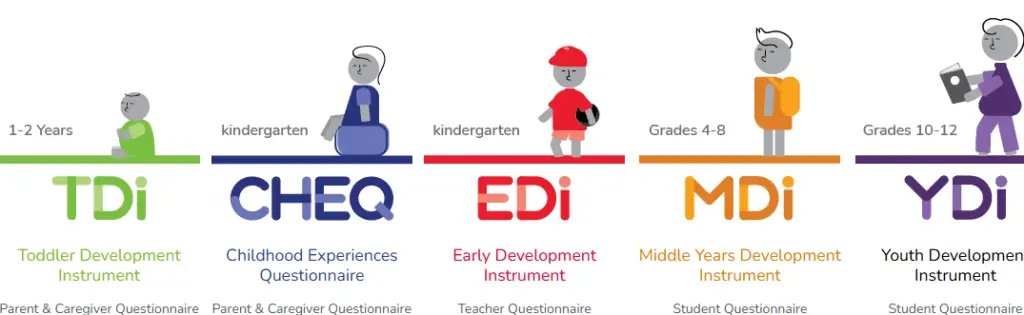
Addressing Data Mining and Privacy in Schools
Data Mining in Schools – Say No to Big Bro!
- data-mining & use of ‘passive consent’ in schools and on all BC population – UBC’s HELP and PopdataBC
Supporting Legal Challenges and Parental Rights
Supporting children’s well-being and parental child care since 1987.
Mature Minors?
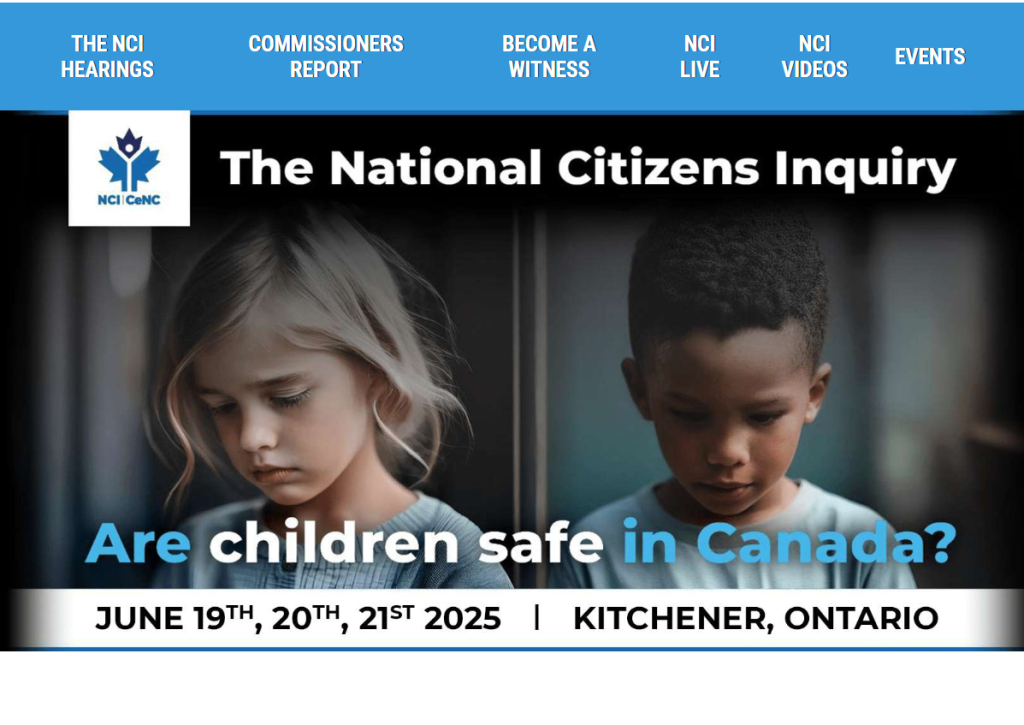
- From education and parental rights to sex trafficking, mental health, and the impacts of technology, these hearings in Canadian Cities explored the complex and rapidly evolving landscape that shapes the lives of our youth.
“Continue the Forever Journey”